-
Building science versus sleep medicine
It’s cold outside. The furnace is running. When the temperature indoors at the thermostat first exceeds the set temperature, the furnace shuts off. The indoor temperature slowly falls to below the set temperature, then the furnace kicks in again. The one-degree F temperature drop takes about ten minutes. Now, suppose the temperature drops fast, say…
-
A building scientist looks at transcendence

I love how architecture is described as a marriage. It’s a marriage between, what exactly? The sacred and the profane? Form and nature? Spiritual and mundane? Art and craft? As a building scientist I know exactly which side of the bed I sleep on in each of these pairings. I ought to have at least…
-
Fun with radon building science

I was going through old files a while ago and I ran across this chart that I generated from data I had on hand. The data are at least 20 years old. The data are shown in the chart below. I can imagine two responses after taking in what the data here seem to say:…
-
Lambert optics and vapor pressure
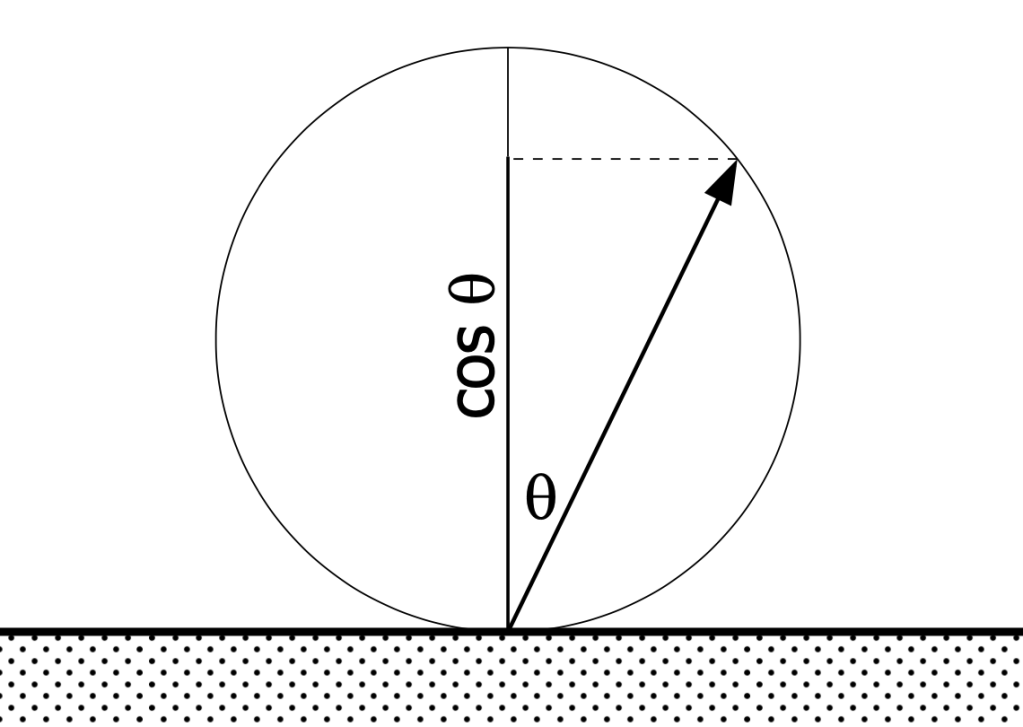
William Thompson, Lord Kelvin, made a claim in 1869 that vapor pressure is reduced over a curved meniscus compared to vapor pressure over a flat surface. He bases this on Laplace’s finding of 65 years earlier that the liquid pressure in a liquid is raised or lowered depending on whether the liquid meniscus (measured from…
-
Attic venting carries an energy penalty
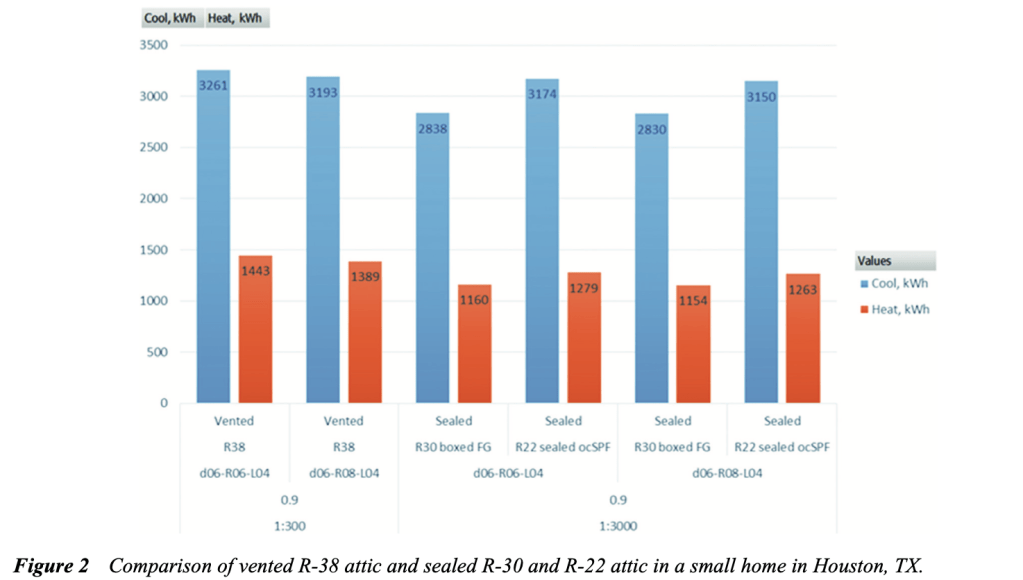
We require attic ventilation in residential (non-low-slope) construction by code. And we’ve been venting attics for decades. Barroom chatter among builders will often leave a napkin on the table with an eave detail. Venting carries an energy penalty? By now, you’ve probably thought the following: In this paper I’ll make the case that on balance,…
-
Water from above, water from below

Much is written about water in masonry. It is important in estimating how the mass of masonry will perform. I would like to distinguish the contributions to performance from water deposited on a masonry wall from above—such as from rain, poor capping, roof overflow, etc.—compared to water rising by capillary action from below. Water from…
-
Bound water

I have often been asked, regarding my book Water in Buildings, what is the main takeaway. In response I told the story (it’s actually apocryphal, sorry, Eric Werling) that a student came to me and asked if I could summarize the book, and I said, yes, I could, in fact I could do it in…
-
Frost heaving
Can ice damage building masonry? Masonry elements that look upward, that face the sky, are often in bad condition, and ice may play a part. We can damage masonry elements in the lab by subjecting them to frost dilatation testing, which completely surrounds a water-saturated sample with cold temperature, and drives ice inward. How about…
-
Vapor pressure

The starting point for building science is psychrometrics and the starting point for psychrometrics is water vapor pressure. Ever since the big bang, well a little later when matter condensed, our universe became composed of, among other things, atoms and molecules that have high speed and they collide elastically with one another. Any collection of…
-
Diamonds and granite

Diamonds are rare. Some would say their rarity is managed by the producers, others would say they are simply rare, and therefore valuable. I don’t know. Much less, we do not know what their rarity was for the first human occupants who studied the surface minerals and who mined for minerals they found useful. Perhaps…
-
Quicksilver at Giza
How can anyone involved in construction not speculate on how they built and carved the monuments of ancient Egypt? The pyramids of Giza were built very early in Egypt’s history—around 2570 BC—and the great pyramid remained the tallest structure on earth for 3800 years. They were built during the lifetime of the pharaoh Khufu—about 27…
-
You cannot vent away an ice dam

To begin investigating a building science problem I strongly suggest you go to a search engine / images, and see just what the problem is in the eyes of the public. Try it yourself: ice damming. You will find that, unlike a decade or two ago, there are only few photos of ice dams (and…
-
Flash the building to the ground
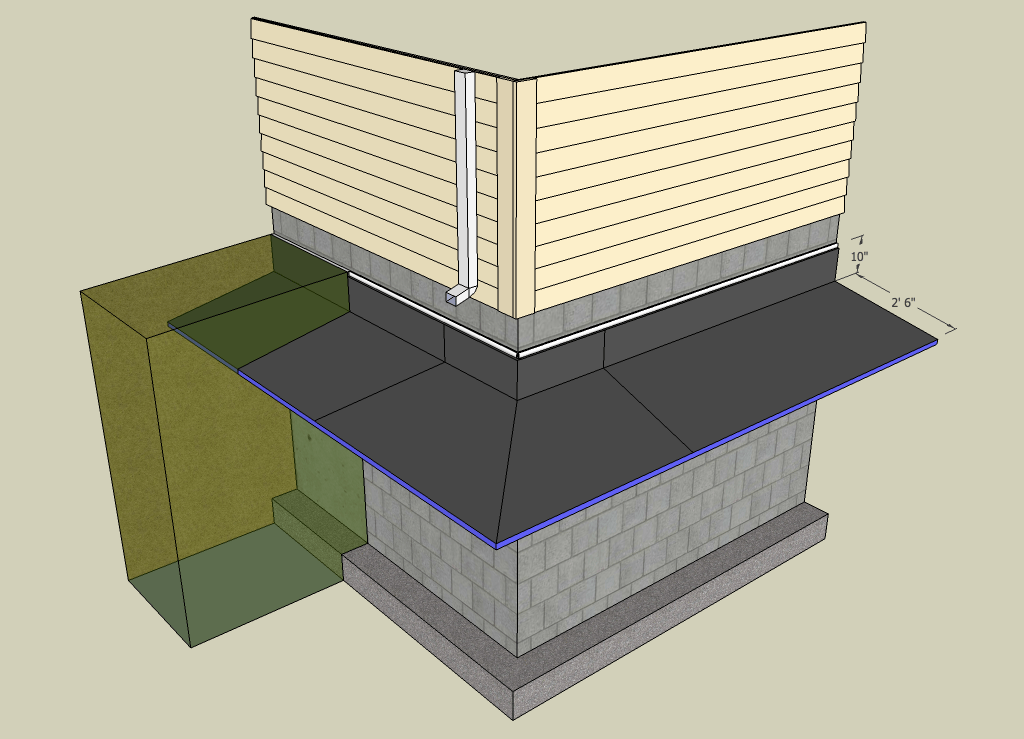
The ground surface is a roof. It has peaks and valleys, it undulates. A building protrudes upward out of the ground (roof), much like a chimney protrudes upward from the roof. Flash the chimney to the roof. Flash the building to the ground, which acts like a roof. Building flashing, or a building apron. Call…
-
Freeze-thaw damage to historic buildings

Building preservationists take precautions. That’s good. Precautions are actions taken to help assure good outcomes, and are predicated on a belief linking the action with the outcome. There is a big concern for freeze-thaw damage in North American buildings. If you ask the preservationists why they take measures to prevent freeze-thaw damage, they are likely…
-
Building science meets ophthalmology
I would like to begin this post with a public service announcement. If you see the following happening in your eye, go immediately to an emergency room. A grey shadow creeps up from the bottom of the eye. You may have retina detachment. Like I did. Three times. You have hours to respond, not days.…
-
Rainwater management in 2 simple rules

Any questions? How are we doing for time? This may seem like a simple approach, but in fact it stands in opposition to the most common approach to securing dry buildings. In the common approach, water is the bad guy, the bogeyman, a cunning and relentless threat to the health of our families, the sponsor…
-
Baalbek trilithon

A few years ago, I ran across a photo showing the trilithon in Baalbek, Lebanon. Three stones were moved onto a stone podium, and these limestones measured about 4m x 4m x 20m, and each weighed 800 tons. Current thinking seems to place the work in Roman times. How were these stones transported and put…
-
Buckling basement walls

One of my first research chores at the University of Illinois, back in 1985, was to investigate residential basement walls that were buckling inward. This was common—almost universal—in 8” block basement walls of depression-era and post-war housing, with as much as 7 feet of unbalanced fill. I was invited to work on this with Paul…
-
Flashing takes wings

The Canada Mortgage and Housing Corporation provides some of the best advice on building that can be found. One in their construction series has been on my shelf since its publication in 1998—Flashings. One drawing caught my eye, drawing 2.13a. It shows about the ugliest flashing job I’ve ever encountered. Don’t EVER flash a chimney…
-
Enthalpy exchange doesn’t work, does it? (updated below)

I need your help. By my calculations, counter-flow plate-type enthalpy exchangers don’t work. So either there is something wrong with my calcs, or there is an industry out there that should take a good look at themselves. Rotary-wheel enthalpy exchangers probably work, though I’ve heard grumbling about maintenance and repair from mechanical engineers who had…
-
Welcome
My name is William Rose. I made a career of building science at the University of Illinois. Now I’m wrapping up, and finding a public home for work I’ve done and work that until now has been incomplete. I hope you find it interesting, entertaining and useful. There are several themes in the posts to…
-
No more pipe bursting due to freezing

In 1994 Dean Flessner, a vice-president of State Farm Insurance, walked into our office and asked if we could solve the problem of pipe bursting due to freezing. We learned from him that the insurance industry had four categories of claims of damage to homes—downright Aristotelean—those due to earth, air, fire and water. The insurance…
-
Add-a-hole with the blower door

Houses are rarely a single volume with a single enclosing skin. Houses and buildings have zones that are partially inside and partially outside a building, like attics, basements, crawl spaces and attached garages. It would be nice to know their contribution to the overall building leakage. It turns out that for a zone, we can…
-
Attic ventilation, a brief introduction

In 1990 I was provided generous funding by CertainTeed Corporation to study attic ventilation. The study continued for about 10 years. We learned a lot from that study, which I will report on, later. I just want to share with you what was the major finding from the study. We began with a long building…
-
The “craftsman’s hand”
In my early 20s, I was captured by the romance of craft. What could be better than doing a tough job, doing it expertly, having it look good, and getting some appreciation. Being a good “mechanic” was the term of highest praise among my crowd. In George Eliot’s Adam Bede, a tough carpenter wins the girl’s…
-
Condensation, a brief introduction
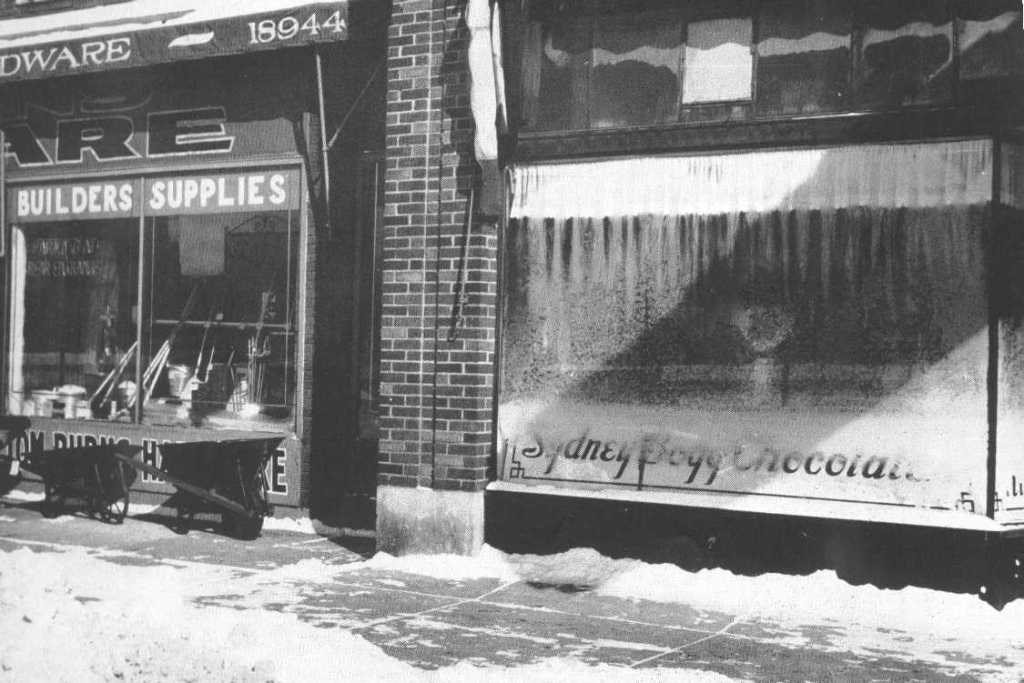
Here’s the rap I’ve given a hundred times. Can you get condensation on a mirror? (Show a mirror. Heavy breath on the mirror. Note the fog.) Yes, you can get condensation on a mirror. Can you get condensation on a sponge? (Show a sponge. Heavy breath on the sponge. Note that the sponge is unchanged.…
-
Legacy practices

The building industry goes back millenia. So it should be no surprise that many of the practices in putting up a building are legacy practices—that is, they arose somewhere in building history, and they are retained because, well, sometimes just because. And this is good. Doing things the way we learned to do them, and…

 Watersmiths